Waterproofing Material Selection: The Key to Increasing Energy Efficiency in Your Construction Projects
Waterproofing Material Selection: The Key to Increasing Energy Efficiency in Your Construction Projects
In construction projects, waterproofing is a critical application for the durability, comfort, and long-lasting performance of the building. Incorrectly selected insulation materials can lead to water leaks, moisture problems, energy losses, and high maintenance costs in the long term. Therefore, waterproofing material selection should be carefully planned according to the specific needs of each project.
As Isoweir, with the insulation solutions we offer for construction, industry, and marine applications, we emphasize the importance of selecting materials suitable for different areas of use. With the right product and the right application method, buildings become safer against the harmful effects of water.
Why Is Waterproofing Material Selection Critically Important?
Waterproofing is not limited to preventing water from entering the structure. It also contributes to protecting structural elements, increasing energy efficiency, and reducing maintenance costs. Especially in areas such as foundations, terraces, roofs, basements, balconies, and industrial floors, choosing the right material directly affects the success of the application.
Although using the wrong material may seem economical in the short term, it can cause serious problems such as blistering, cracking, leakage, mold, dampness, and surface deterioration over time. Therefore, when choosing waterproofing materials, not only price but also performance, durability, application area, and long-term efficiency should be evaluated together.
Criteria for Choosing the Right Material for Waterproofing in Construction Projects
Every project has different waterproofing needs. Residential projects, industrial facilities, marine structures, exterior façades, or terrace applications may not deliver the same performance with the same material. For this reason, the following criteria must be considered during the selection process:
- Project type and area of use: Different areas such as residential buildings, industrial facilities, marine structures, terraces, roofs, or foundations have different needs.
- Waterproofing performance: The material’s capacity to block water is decisive, especially in critical areas such as basements, terraces, and roofs.
- Durability and long service life: Products resistant to UV rays, mechanical impacts, chemicals, and temperature changes should be preferred.
- Contribution to energy efficiency: Waterproofing can support the energy performance of the building by reducing moisture and heat losses.
- Ease of application: The selected material must be suitable for the surface and applicable with the correct technique.
- Cost and economic service life: In addition to the initial investment cost, maintenance, repair, and renewal costs should also be taken into account.
When choosing the right product, reviewing insulation products developed for different areas of use can make the decision-making process easier.
GET INFORMATION ABOUT WATERPROOFING SOLUTIONS
Types of Waterproofing Materials and Their Areas of Use
Different types of materials are used for waterproofing. Each material has different advantages, application areas, and performance expectations. Therefore, when selecting materials, the environmental conditions of the building, the water pressure it will be exposed to, and its intended use should be evaluated together.
Bitumen-Based Membranes
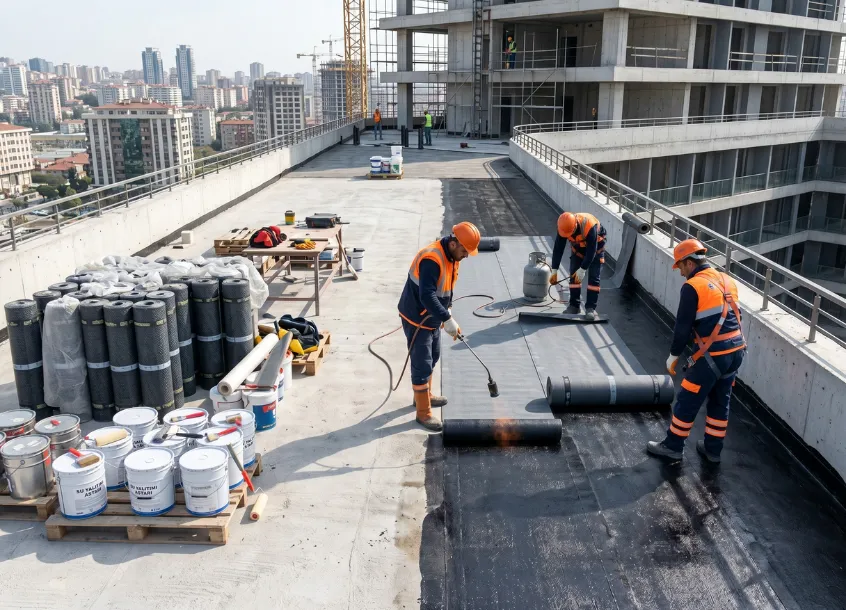
Bitumen-based membranes are widely preferred in foundation and roof insulation due to their flexible structure and high waterproofing properties. They can create an effective barrier on large surfaces and provide long-term protection when applied correctly.
Polyurethane and Polymer-Based Coatings
Polyurethane and polymer-based coatings provide resistance against cracks thanks to their elastic structure. They can be preferred on terraces, balconies, roofs, and moving surfaces. Their flexible structure helps them adapt to expansion and contraction caused by temperature changes.
Epoxy-Based Coatings
Epoxy-based coatings stand out in areas that require high chemical and mechanical resistance. They can provide a strong solution for industrial floors, production facilities, warehouses, and marine applications. In addition to waterproofing, they also increase surface durability.
Cement-Based Waterproofing
Cement-based waterproofing products are frequently preferred indoors and on mineral-based surfaces. Thanks to their ease of application and breathable structure, they can be used in bathrooms, basements, water tanks, and similar areas.
Special Waterproofing Systems
In some projects, combined systems may be required instead of a single product. In such applications, the compatible use of primers, membranes, coatings, and topcoat products increases insulation performance. Isoweir’s product solutions for different needs support the correct project-based system selection.
Real-World Example: Material Selection for Terrace Waterproofing
Let’s consider a new residential project in an area of Istanbul that receives heavy rainfall and requires terrace waterproofing. In this project, the selected waterproofing material must provide high water impermeability while maintaining its flexibility against temperature changes.
In such an application, polyurethane-based waterproofing materials can be more advantageous against crack formation due to their elastic structure. With proper surface preparation, suitable primer use, and professional application, the terrace surface can be protected against water damage. In this way, the building is protected from water leaks and the need for long-term maintenance is reduced.
Advantages of Advanced Technology Products
Advanced waterproofing products not only provide water impermeability, but also support building performance and service life. Especially epoxy coatings, flexible floor solutions, and special insulation systems offer advantages in terms of durability, application safety, and long-lasting protection.
- They provide high waterproofing performance.
- They help reduce maintenance and repair costs.
- They increase surface durability.
- They offer solutions suitable for industrial, commercial, and residential projects.
- They can contribute to sustainable building goals.
What to Consider in Project-Based Waterproofing Material Selection
Every construction project has its own unique conditions. Therefore, waterproofing material selection should not be considered a standard decision, but a project-based technical evaluation process.
- A detailed needs analysis should be carried out: The intended use of the building, its location, level of water exposure, and surface type should be determined.
- Material performance data should be reviewed: Technical properties such as water impermeability, elasticity, UV resistance, and chemical resistance should be compared.
- Expert opinion should be obtained: The most suitable product should be determined by consulting insulation specialists and manufacturers.
- The application technique should be selected correctly: Surface preparation, primer use, layer thickness, and drying times directly affect performance.
- Long-term cost should be calculated: Not only product price, but also maintenance and renewal needs should be evaluated.
GET INFORMATION ABOUT WATERPROOFING SOLUTIONS
How Is Energy Efficiency Achieved in Waterproofing Material Selection?
Waterproofing is directly related to energy efficiency. Water leaks and moisture can weaken thermal insulation in the building envelope. This may cause heating and cooling costs to increase. When the right insulation material is used, the building becomes drier, more balanced, and more efficient.
With waterproofing:
- Heat losses can be reduced.
- Indoor comfort can increase.
- Risks of mold and dampness caused by moisture can decrease.
- The service life of structural elements can be extended.
- Maintenance and repair costs can be minimized.
Frequently Asked Questions About Waterproofing Material Selection
Which material provides better performance in waterproofing?
The best material depends on the application area and project needs. Elastic polyurethane coatings stand out on terraces and balconies, while epoxy-based coatings may be more suitable for industrial floors. Bitumen-based membranes are frequently preferred for foundation and roof insulation.
Is waterproofing only applied outdoors?
No. Waterproofing can be applied not only on exterior façades, roofs, and terraces, but also on basements, bathrooms, water tanks, industrial floors, and indoor surfaces. The key point is that the material to be used must be suitable for the surface and the level of water exposure.
What environmental factors should be considered when choosing insulation materials?
UV resistance, humidity level, temperature changes, chemical exposure, mechanical loads, and environmental sustainability criteria should be considered in material selection.
Conclusion: Success in Waterproofing Material Selection Begins with Proper Analysis
Waterproofing material selection is a critical decision for protecting buildings against water damage, increasing energy efficiency, and reducing long-term maintenance costs. The right material selection should be made by evaluating the project type, surface conditions, level of water exposure, and application technique together.
Isoweir’s wide product portfolio and technical know-how offer high-quality and durable waterproofing solutions for the needs of different industries. You can contact Isoweir for maximum performance, long-lasting protection, and reliable application support in your projects.